For Climbers
How to Choose a Climbing Guide
Your first guided day — or your tenth — should match your goals, your experience, and the place you want to climb. Here's a clear way to think about it.
Hiring a climbing guide should feel like the start of a good day, not a gamble. But if you've never done it, the choices can feel opaque: destinations, certifications, single-pitch versus multi-pitch, half-day versus full-day. Here's a simple way to think about it.
Start with what you actually want
Before you search, be honest about three things:
- Your experience. Never climbed? Indoor climber wanting a first outdoor day? Experienced and chasing a specific objective?
- Your people. Just you? A partner? A family with kids? A group of friends?
- Your goal. A fun day out? Learn a skill? Climb a particular route? Push your grade?
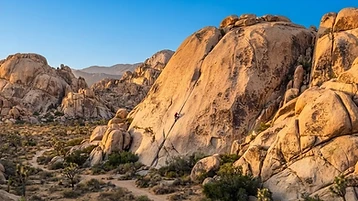
The right guide for a first-timer in Joshua Tree is not the same as the right guide for an experienced climber chasing a multi-pitch objective in Eldorado. Knowing which one you are is the first step.
Look for fit, not just credentials
Certifications matter — AMGA and PCGI credentials tell you a guide has been trained and assessed to a standard. But every certified guide isn't the right guide for every climber. Read the profile. Look for:
- Specialties that match your goal — beginner instruction, multi-pitch, trad, family programs.
- Areas they actually work — a guide who knows the area well will give you a better day than one who's visiting it for the weekend.
- A style that sounds right for you — some guides are teachers, some are coaches, some are objective-focused. The profile usually tells you which.
Use the signals
On Dialed, guides and services can post a lightweight signal — taking inquiries or open to work — for a destination and season. It tells you who's active and interested right now. It's not a confirmed slot; it's an invitation to talk. Start there.
Contact them and have a conversation
This is the part a booking platform skips — and it's the part that matters most. Reach out. Tell them your experience, your group, your goal, your dates. Ask whether it's a fit. A good guide will be honest about it: if you're not a match, they'll often point you to someone who is.
You're not just buying a day of climbing. You're choosing who you'll trust on the rock. A real conversation is how that trust starts.
Red flags and green flags
Green flags:
- A clear, specific profile that matches what you're looking for.
- A prompt, human reply that asks about your experience and goals.
- Honest answers about what's possible in the conditions and season.
Red flags:
- Vague guarantees about routes or grades before they've spoken to you.
- Pressure to book immediately.
- No clear answer on certifications, permits, or insurance.
The short version
Know what you want. Find a guide whose profile fits. Use the signals to see who's active. Then talk to them. The right guide makes the day — and the right guide is almost always the one who took the time to have the conversation.